CHOLA DYNASTY LEGACY
An Ancient Art Form Preserved
Through Devotion
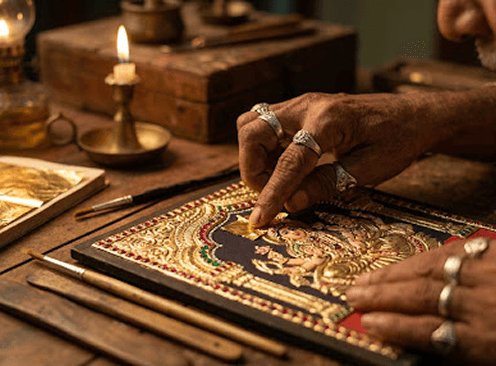
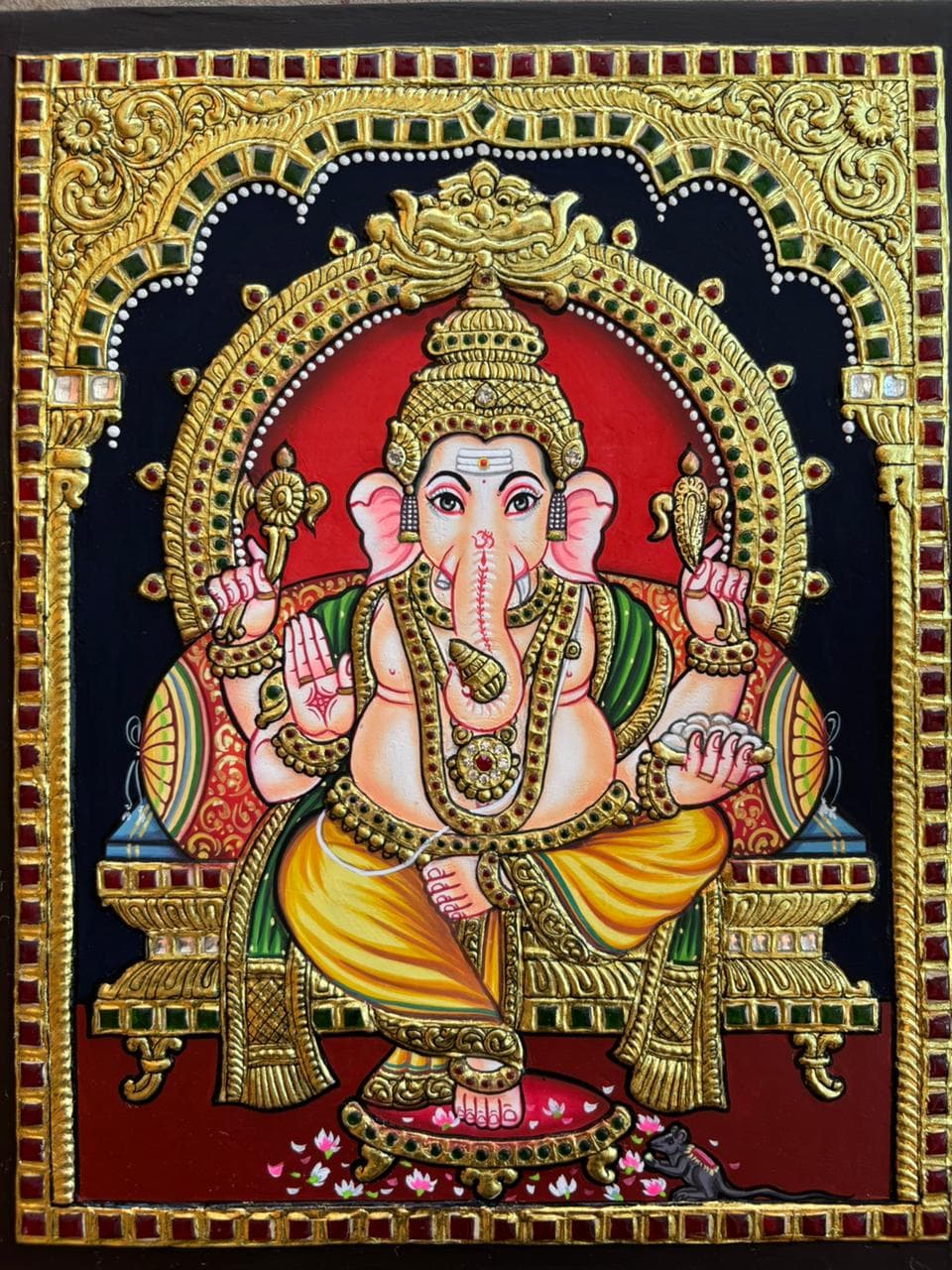
Originating in the historic town of Thanjavur, Tanjore painting is a magnificent classical art form that evolved from 11th-century Chola temple murals into a royal luxury under the Nayaka and Maratha rulers of the 16th to 19th centuries. Maratha patronage, especially under Raja Serfoji II, transformed the craft by introducing its most iconic features: three-dimensional gesso relief work, the inlay of semi-precious stones, and the lavish application of authentic 22-karat gold leaf. Today, this deeply devotional art form holds a protective Geographical Indication (GI) tag, celebrated worldwide for its stylized, radiant depictions of divine deities and a glittering texture that never tarnishes
11TH CENTURY · THE ROOTS
The Chola Dynasty establishes a tradition of grand, divine art through massive temple murals in South India.
16TH CENTURY · THE FOUNDATION
Under the Nayaka rulers, artists begin painting on wooden planks (Palagai Padam), creating the classic style of deities framed by grand architectural arches.
18TH & 19TH CENTURY · THE GOLDEN ERA
The Maratha rulers, especially Raja Serfoji II, elevate the art into a royal luxury. They introduce the signature 3D gesso relief work, embedding semi-precious stones and layering the iconic 22-karat gold foil.
TODAY · A GLOBAL TREASURE
Celebrated globally for its brilliant luster and texture, the art form holds a Geographical Indication (GI) tag to protect and preserve its authentic heritage.
The Signature IdentityA true Tanjore painting is defined by its deep spiritual themes, stylized plump figures with almond eyes, and embossed gold work that catches the light beautifully.